
Acid Mine Drainage: Why Water Quality Cannot Be Judged by Appearance Alone
Clear water doesn't always mean clean water. Learn how pH testing revealed hidden Acid Mine Drainage impacts and why visual inspection alone can be misleading.
Overview
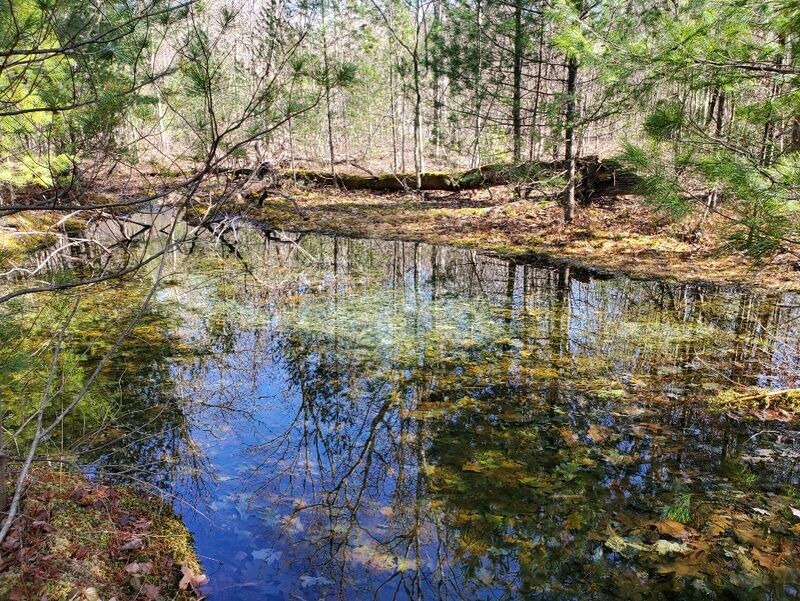
Field observations can sometimes challenge assumptions. During a recent visit to an Acid Mine Drainage (AMD) site in Centre County, Pennsylvania, surface water appeared remarkably clear. Ditches and wetland channels showed little visible indication that anything was unusual.
However, water testing told a very different story. Despite its appearance, the water had a pH below 4, with some locations measuring as low as 1.9. The contrast reinforced why visual inspection alone is not enough to understand site conditions.
The Challenge
Acid Mine Drainage is not always immediately apparent in the field. Water that appears clean can still contain elevated acidity and dissolved metals that are invisible to the eye.
At low pH levels, heavy metals such as:
- Iron
- Aluminum
- Manganese
- Zinc
- In some cases, lead and nickel
remain dissolved in the water rather than forming visible deposits.
The acidity originates when sulfur-bearing minerals in rock react with air and water, producing sulfuric acid. As the pH decreases, metals remain in solution and continue moving with the water.
The visible impacts often appear only after conditions change downstream.
The Approach
Understanding AMD requires combining field observations with water quality measurements and an understanding of the underlying chemistry.
In this case, observations included:
- Comparing visual conditions with measured pH values
- Examining how water quality changed along the drainage path
- Identifying where dissolved metals began to precipitate as environmental conditions shifted
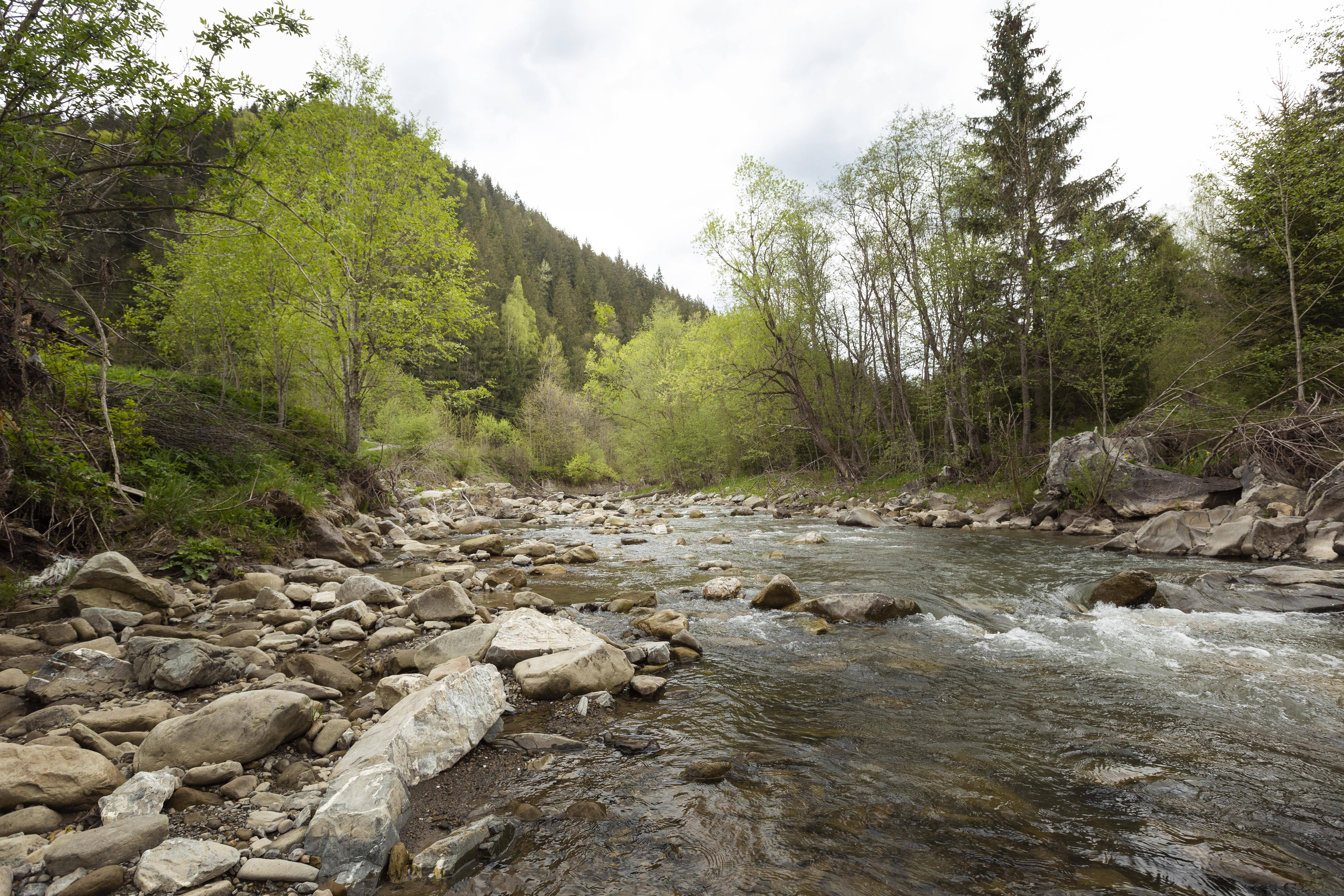
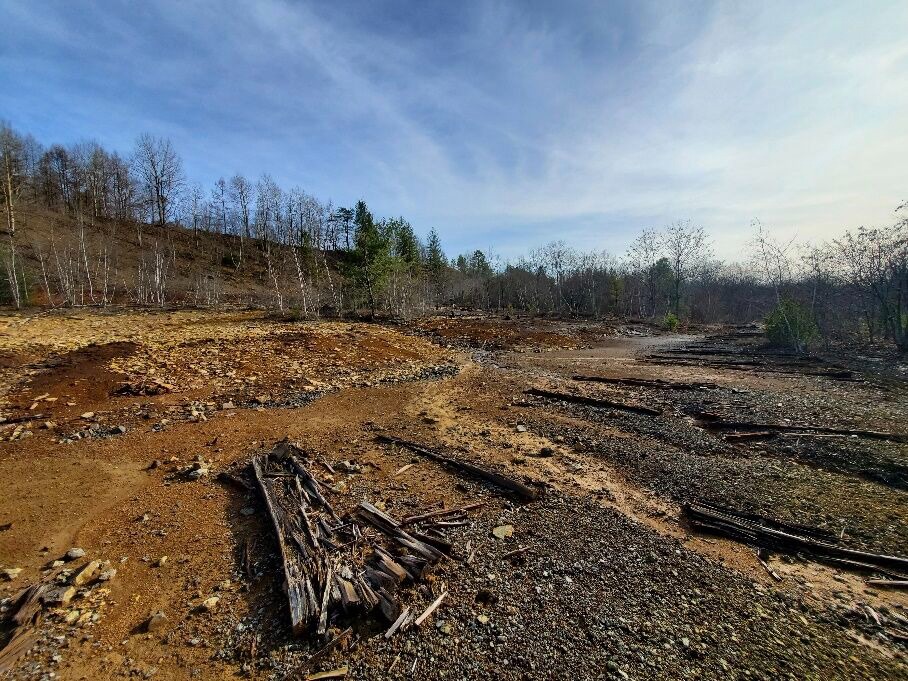
As the water entered a creek and the pH increased, dissolved metals came out of solution, leaving behind orange iron deposits across the streambed.
Looking beyond surface appearance provided a more complete understanding of what was occurring across the site.
The Outcome
- Clearer interpretation of field conditions through both visual observation and water quality measurements
- Improved understanding of how changing pH influences metal behavior
- Better context for evaluating AMD-affected sites during field assessments
The Takeaway
Field conditions do not always tell the full story. Water that appears clear may still contain dissolved contaminants that only become visible when environmental conditions change.
Combining site observations with water quality data and an understanding of the underlying chemistry provides a more accurate picture of how Acid Mine Drainage affects streams and surrounding ecosystems.
